


By Nguyen Thanh-Huyen (Ella)
In Vietnam, more and more people are becoming English teachers after working in completely different careers. Some used to work in business, tourism, banking, or technology before entering the classroom. This shift did not happen by chance. One major reason was the Language Project 2020 launched by the Ministry of Education and Training (MOET), which aimed to improve English education nationwide.
The project created a huge demand for English teachers. However, there were not enough professionally trained language teachers to meet this demand. As a result, many schools and language centers began recruiting people from other careers, especially those with high IELTS scores, to teach English. Although the project struggled to significantly improve teachers' overall English proficiency across Vietnam, it created an unexpected side effect: English, especially IELTS, became a massive industry. Today, IELTS scores are often seen as a ticket to better universities, scholarships, and job opportunities. For many students and parents, English is no longer just a school subject; it is an investment for the future.
This is where second-career teachers become interesting. Many of them bring real-world experiences into the classroom, making lessons more practical and relatable. Because they have worked outside education, they often understand communication, problem-solving, and workplace skills in ways traditional teachers may not.
A study we have conducted looks at how these teachers make decisions, solve problems, and create meaningful learning experiences for students. In education research, this is called teacher agency – basically, the ability teachers have to shape their own teaching and professional paths. What we found was inspiring. Many second-career teachers are highly creative and student-focused. Because they have worked outside education, they often connect lessons to real life more naturally. They are also more willing to try new teaching methods, support students emotionally, and question outdated classroom practices.
Still, their stories show something important: Good teachers do not always come from traditional pathways. Sometimes, the people who change education the most are those who entered it later in life.
But the journey is not always easy. In Vietnam, teachers still work within strict systems. Fixed curricula, administrative pressure, and social expectations can limit what teachers feel free to do. Some second-career teachers also face doubts from others who see them as “non-traditional” educators. Even so, these teachers continue finding ways to adapt and grow. Their stories remind us that good teaching does not follow a single fixed path. Sometimes, the most impactful educators are those who arrive later, carrying experiences from entirely different worlds.
By understanding and supporting teacher agency, schools can create more flexible, empowering environments, not only for teachers but also for the students they inspire every day.
The Author
Nguyen Thanh Huyen has been a lecturer at Ho Chi Minh City University of Industry and Trade since January 2021. She graduated with a bachelor's degree from HCMC University of Pedagogy and then earned a master's degree in applied linguistics from Curtin University, Australia. Currently, Huyen is pursuing her PhD at Taiwan Tech University, majoring in digital education. She has a strong interest in the field of teacher education, teacher agency and emotions, and professional development in the digital age, as well as computer-assisted language learning (CALL) and mobile-assisted language learning (MALL). As a researcher, Huyen has presented at various international conferences and has published several peer-reviewed articles. Email: ellanguyen6694@gmail.com
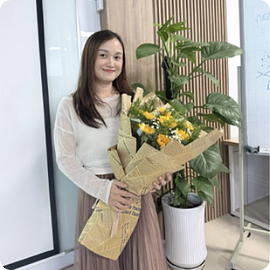
(Photograph of Huyen courtesy of the author)


